Tampa, FL Remodels
How Much Does a Bathroom Remodel Cost in Tampa? (2026)
The short answer
Room type sets your starting range, and the gap between types is wider than most homeowners expect. A powder room and a master bathroom are not the same project at different sizes — they are different projects.
Starting ranges by bathroom type
| Bathroom type | Starting range | Typical footprint | What that covers |
|---|---|---|---|
| Powder room | $4,000–$6,500 | 15–25 sq ft | Toilet, vanity, flooring, paint, lighting. No shower or tub, so no waterproofing system |
| Guest or hall bath | $11,000–$19,000 | 35–50 sq ft | Full tub-shower combination, vanity, toilet, tile floor and surround, new waterproofing, exhaust fan |
| Master bath | $19,000–$30,000 | 60–120 sq ft | Separate shower, double vanity, larger tiled area, more fixtures, more electrical, often a tub as well |
| Not sure yet | $13,000–$21,000 | — | A middle estimate while you work out scope. The estimator will narrow it in five questions |
These are starting ranges before you choose a single finish. And unlike a kitchen, where four decisions each move the number a bit, a bathroom has one decision that dominates everything else.
What moves a bathroom number most
| Decision | Effect on your number |
|---|---|
| Finish level | up to +80% of base |
| What's behind the walls | [PULL FROM ESTIMATOR] |
| Shower type | [PULL FROM ESTIMATOR] |
| Vanity | [PULL FROM ESTIMATOR] |

Finish level alone can add 80 percent. That is not a small adjustment — it means a guest bathroom with a $11,000 floor can land near $20,000 on materials selection before anything unusual happens. Tile is the reason. A bathroom is mostly tiled surface, tile is installed by hand at a fixed labour rate per square foot regardless of what you paid for the tile, and a material upgrade compounds across every wall in the room.
This is also why bathroom quotes vary so much between contractors. Two bids on the same room can assume completely different tile allowances and neither will say so.
What actually drives the number
Room type
Room type sets your base because it determines how many wet systems the job contains. A powder room has one fixture, no shower, and therefore no waterproofing assembly — which is why it costs a fraction of anything else. A guest bath adds a tub-shower, a tiled surround, a waterproofing system and an exhaust requirement. A master adds a second vanity, usually a separate shower, and substantially more tiled area.
Square footage matters far less than it does in a kitchen. A 60-square-foot master and a 90-square-foot master cost roughly the same if they contain the same fixtures.
Finish level
Finish level is the single largest driver in a bathroom, capable of adding 80 percent to the base range — a bigger swing than any decision in a kitchen. It covers tile, fixtures, vanity, countertop and glass as one selection tier rather than as separate line items.
The reason it swings so hard is proportion. In a kitchen, cabinets absorb 30 to 40 percent of the budget and everything else is spread thin. In a bathroom, tiled surface is most of the room, and it is priced twice: once for the material and once for the labor to set it. Labor typically accounts for 40 to 60 percent of a bathroom budget. Larger-format tile sets faster; small mosaic, herringbone patterns and full-height shower walls set slower, and the labor difference is real money.
What's behind the walls
This is the item most likely to change your number after work starts, and the one no contractor can price accurately from a walkthrough. Bathrooms hide their condition better than any other room, because everything that fails in a bathroom fails behind tile.
What we find, roughly in order of frequency: failed or absent shower waterproofing with rot in the framing below, corroded cast iron drain lines in pre-1975 homes, supply lines that need replacing while the wall is open, and subfloor damage around the toilet flange. The Tampa section below covers what each of those means in this market specifically.
We price a contingency into every bathroom proposal for this reason. Industry practice is 10 to 20 percent of the project budget held in reserve for what demolition uncovers, and on a bathroom in a home built before 1975 the upper end of that range is the honest number.
Shower
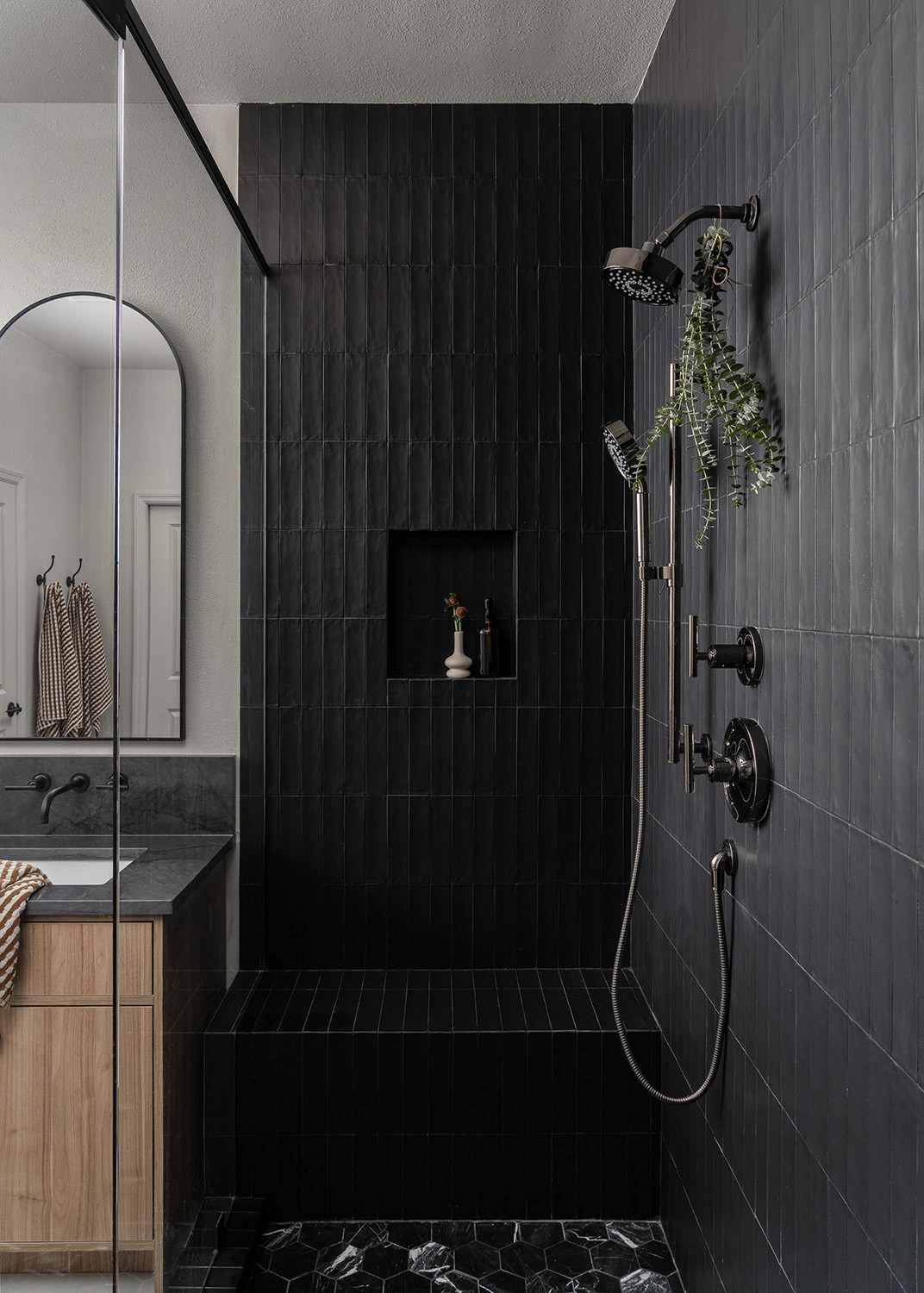
The shower is where a bathroom budget goes from predictable to variable. A prefabricated acrylic surround is the least expensive and least risky option. A tiled shower costs more in materials, considerably more in labor, and requires a waterproofing system installed correctly beneath it.
Three choices inside the shower each carry real cost: a curbless entry requires recessing the slab, which in a slab-on-grade Florida home means cutting and repouring concrete. Frameless glass costs several times what a framed enclosure costs and cannot be ordered until the tile is set and measured. A bench, niche or double shower head each add plumbing or framing work.
Vanity
Vanities span a wider price range than almost any other single item, from stock units to custom cabinetry, and the same Section 232 tariff situation that applies to kitchen cabinets applies here.
Briefly, because it is widely misreported: a 25 percent tariff on imported vanities took effect in October 2025. The scheduled increase to 50 percent on January 1, 2026 was rolled back within days and the rate has stayed at 25 percent, now scheduled to rise no earlier than January 1, 2027. If a bid has a vanity allowance inflated for a 50 percent tariff, ask which one — because it did not land.
Permits and inspections
A bathroom remodel is more likely to require permits than a kitchen remodel, because a bathroom is almost entirely plumbing, electrical and mechanical.
Under City of Tampa code, cabinetwork, flooring and painting need no building permit regardless of cost. But replacing a shower valve, moving a drain, adding a circuit for a heated floor, or installing an exhaust fan all require trade permits — and separate ones for each discipline. Every permit carries the Florida Building Permit Surcharge of 2.5 percent of permit value with a $4.00 minimum.
There is one requirement worth knowing before you compare bids. Most jurisdictions require the shower waterproofing to be inspected before tile goes on, typically by a flood test in which the pan is plugged and filled and must hold water for 24 hours without measurable loss. A contractor who tiles before that inspection has skipped a step you cannot see afterwards.
[LINK: City of Tampa Construction Services FAQ] [LINK: City of Tampa Permit Fee Schedule] [LINK: NAHB, January 2026 — tariff delay]
What does your remodel actually cost?
Five questions and you'll see a real Tampa number. No email, no phone call, no “we'll get back to you.”
Where Tampa is different
A bathroom in Tampa carries risks a national cost calculator has no way to price. Four of them matter enough to change your budget.
Cast iron drain lines, and the 1975 line. Nearly 40 percent of Florida homes were built before 1975, and those homes have cast iron drain lines running under the slab. Cast iron has a 50-to-75-year design life nationally; in Florida, mineral-heavy water working from the inside and damp, corrosive soil working from the outside routinely bring failures forward to the 25-to-30-year mark. Corrosion thins the pipe from the bottom until it cracks.
This matters more in a bathroom than anywhere else in the house, because a bathroom sits directly on top of the largest concentration of drain line in the building. When we open a pre-1975 Tampa bathroom floor, checking the condition of that pipe is part of the job — and if it has failed, replacing it while the floor is already open costs a fraction of what it costs after your new tile is down. Full replacement is expensive enough that it deserves its own conversation, but discovering it in year two of a finished bathroom is the genuinely bad outcome.
The slab, again. No basement, no crawlspace, so drain lines are cast into the concrete. Moving a toilet, shower or tub means saw-cutting the slab, trenching, replumbing, inspecting and repouring. Bathrooms have more fixtures packed into less space than any other room, so layout changes here cost more than layout changes anywhere else.
Waterproofing, and what actually fails. Tile and grout are not waterproof. They are a wear surface. The waterproof layer is the membrane underneath, and it only works as a continuous unbroken system — sloped to the drain, sealed at every corner and penetration, lapped up the walls above the curb.
Almost every leaking shower we open failed for one of a short list of reasons: no membrane at all, no pre-slope beneath the liner so water pooled instead of draining, a punctured liner, clogged weep holes at the drain, or corners that were grouted when they should have been caulked. In Tampa's humidity, a slow failure behind tile does not dry out between uses. It stays wet, and rot and mold follow in the framing you cannot see.
Ventilation is a code requirement, not an upgrade. Florida code requires bathrooms to have mechanical exhaust of at least 50 cfm intermittent or 20 cfm continuous, and that air must go outside — not into an attic, not into a crawlspace. Venting a bathroom fan into an attic is one of the most common defects we find in Tampa homes, and in this climate it converts a moisture problem in one room into a moisture problem in the roof structure.
Code is a floor, not a target. For bathrooms up to 100 square feet the accepted guidance is 1 cfm per square foot; above that, size by fixture.
Polybutylene supply lines, 1978 to 1995. Grey flexible pipe stamped PB2110. It degrades on contact with chlorinated municipal water, was pulled from the market after a $1 billion class action settlement in 1995, and many Florida insurers now decline or surcharge homes that still have it. If we find it while a wall is open, we will tell you before we price the repair.
Permitting runs at three different speeds. Which authority you fall under depends on your address.
[LINK: cast iron failure data → Florida plumbing and insurance sources] [LINK: ventilation → Florida Building Code, Mechanical, Table 403.3.2.3]
Plan review by permitting authority
| Authority | Applies to | Typical residential plan review |
|---|---|---|
| City of Tampa | Addresses inside Tampa city limits | Roughly 10–15 business days for standard residential; simple work can be faster |
| Hillsborough County | Unincorporated Hillsborough only | Commonly quoted at 10–15 business days, though the county does not publish a guaranteed timeline and complex jobs run longer |
| Temple Terrace / Plant City | Those municipalities | Separate departments, separate submissions |
Two further requirements catch people out. Hillsborough County requires a recorded certified Notice of Commencement before the first inspection on most jobs above $5,000. And if your property sits in a designated historic district — Ybor City, Hyde Park, Tampa Heights, Seminole Heights — architectural review adds roughly 30 days, and the reviewing commission meets monthly, so missing a meeting costs a month rather than a week.
Hurricane season runs June 1 to November 30 and affects material deliveries and inspection scheduling. Frameless shower glass, which cannot be ordered until your tile is set, is the item most often caught by it.
Why a small room costs this much
The most common reaction to a bathroom quote is some version of: it's forty square feet, how can it cost $25,000? It is a fair question and it deserves a real answer rather than a defensive one.
A bathroom is the most trade-dense room in your house. A kitchen is a large space with cabinets around the edges. A bathroom packs plumbing, electrical, mechanical ventilation, waterproofing, tile, glass, and finish carpentry into a space you can cross in two steps — and every one of those trades needs its own visit, its own inspection, and its own coordination. Six trades in forty square feet costs more per square foot than two trades in two hundred.
That is why bathroom pricing is quoted per room and not per square foot, and why a bathroom cost calculator that works in dollars per square foot will mislead you in both directions.
What the cheapest bid usually leaves out
The waterproofing system. This is the single most common place a low bid finds its savings, and it is invisible the day the job finishes. Tile set over unsealed backer board looks exactly like tile set over a properly installed ANSI A118.10 membrane. The difference appears in year three, in the framing, and by then it is a demolition job rather than a repair.
The flood test. A correctly built shower pan gets plugged, filled, and left for 24 hours before a single tile goes on. It costs a day. Skipping it saves that day and removes the only opportunity to catch a failure before it is buried.
The exhaust fan, or where it vents. Adding a fan is cheap. Ducting it properly to the outside is less cheap, and venting it into the attic is free. Ask where the duct terminates.
A contingency for what is behind the wall. A bid with no contingency line on a pre-1975 home is not a lower price. It is the same price with the bad news deferred to a change order.
What we do instead. Waterproofing is a named line in our proposal with the system specified, not "shower prep." The flood test happens and you are welcome to look at it. Allowances for tile, fixtures and vanity are dollar figures you can take to a showroom and shop against. Contingency is stated up front rather than appearing later as a surprise.
Who we are not right for. If your budget for a full bathroom is $6,000, we cannot do that work to the standard we are willing to put our license behind, and you should learn that from this page rather than after a walkthrough. A cosmetic refresh — vanity, toilet, paint, fixtures, leaving the shower alone — is a real option at that budget and a legitimate thing to do. It is just not the same project.


